
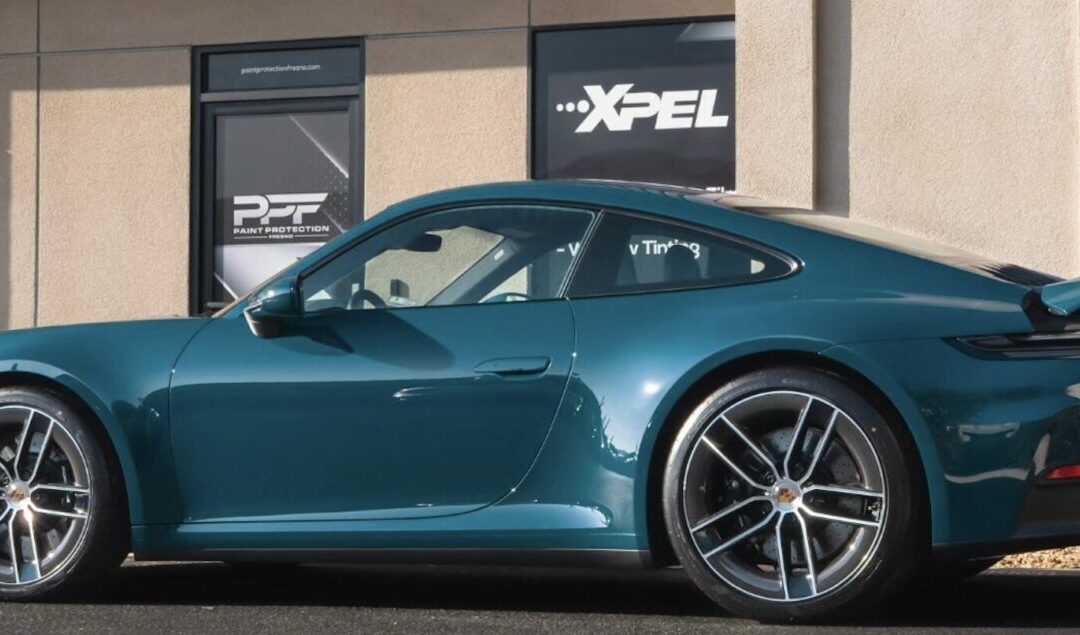
If you’ve been Googling “is paint protection film worth it,” you’ve probably read a dozen generic answers by now. Most of them boil down to “it depends on your situation.” That’s not wrong, but it’s not helpful if your situation is driving in the Central Valley.
Here in Fresno, we don’t have a normal driving environment. We have agricultural dust clouds, 100°F+ heat for months on end, Highway 99 truck traffic flinging debris at freeway speeds, and harvest seasons that blanket everything in fine particulate. This isn’t suburban commuter wear, this is accelerated paint destruction. And it changes the “worth it” math entirely.
We install paint protection film every day at our shop, so we see what the Central Valley does to unprotected paint. This article makes the case plainly: if you drive between Bakersfield and Stockton, Paint Protection Film isn’t a luxury; it’s the most cost-effective way to protect your vehicle’s finish and resale value.
What Makes the Central Valley So Tough on Car Paint
The Central Valley isn’t just “hot and dusty.” It’s a specific combination of environmental hazards that compound each other in ways most paint simply wasn’t engineered to handle long-term.
Agricultural Dust and Harvest Particulate
Fresno County is one of the most productive agricultural regions on earth. That productivity comes with a cost to your car: almond harvest runs from August through October, cotton harvest follows through November, and both generate enormous volumes of fine particulates that settle on every surface.
This isn’t normal road dust; it contains organic material, silica, and sometimes pesticide residue, which can chemically etch the clear coat over time. If you live near orchards or drive county roads between fields, your paint is under constant low-grade assault for roughly a third of the year.
Highway 99 Debris and Rock Chips
Highway 99 is the Central Valley’s main artery, and it’s heavily used by commercial trucks hauling agricultural products, construction materials, and gravel. Every Fresno driver knows the sound of a rock chip hitting the hood at 70 mph.
The front end of any vehicle regularly commuting on 99 or county roads with loose gravel shoulders accumulates chips at a rate that makes repainting almost inevitable within a few years. We regularly see vehicles come in with 20, 30, even 50+ chips on the hood and bumper alone, all from normal Central Valley driving.
Extreme UV Exposure and Heat Cycling
Fresno averages 260+ sunny days per year with a UV index that regularly hits “very high” to “extreme” during summer. Sustained UV bombardment oxidizes the clear coat, fades the paint color, and accelerates the breakdown of any existing wax or sealant.
But the damage is compounded by extreme heat cycling: surfaces can reach 160°F+ in direct summer sun and then cool rapidly with evening delta breezes. Repeated expansion and contraction stresses paint at the molecular level, leading to microcracking and premature clear-coat failure. It’s not uncommon to see 3–5-year-old vehicles in Fresno with paint that looks a decade older.
Pesticide Overspray and Chemical Exposure
Central Valley agriculture relies on regular pesticide and herbicide application. If you park near fields, drive on rural roads, or even live in neighborhoods adjacent to agricultural land, your vehicle is exposed to airborne chemical overspray that can bond to paint surfaces.
Combined with bug splatter from the Valley’s insect population (particularly during warm months), these organic and chemical contaminants create a corrosive film that eats into the clear coat if not removed quickly. Most people don’t wash their car every day, which is exactly why a physical barrier matters.
How Paint Protection Film Directly Addresses Central Valley Conditions
Paint protection film isn’t a coating that sits on top of paint; it’s a thick, optically clear urethane film that physically absorbs impacts and blocks UV and chemical damage. The product we exclusively install is XPEL ULTIMATE PLUS, and its specifications directly address every hazard described above.
- Impact protection against rock chips and road debris: XPEL ULTIMATE PLUS is 8 mil thick, substantially thicker than any spray-on sealant or ceramic coating. It’s designed to absorb the kinetic energy of gravel, rocks, and road debris that would otherwise chip through your clear coat and into the base paint. For Highway 99 commuters, this is the single most valuable feature.
- UV resistance that won’t yellow: Unlike older Paint Protection Film products that turned yellow after extended sun exposure, XPEL ULTIMATE PLUS is engineered to remain optically clear even under sustained UV bombardment. In Fresno’s 260+ sunny days per year, this isn’t a minor detail, a film that yellows would look worse than no film at all. XPEL’s UV resistance means the film continues to protect while remaining invisible.
- Self-healing topcoat activated by heat: Here’s where Central Valley conditions actually work in your favor: XPEL ULTIMATE PLUS features a self-healing topcoat that repairs minor scratches and swirl marks with heat. Light surface scratches from dust particles or car wash brushes literally disappear when the film is exposed to heat, and when your car is sitting in a Fresno parking lot at 105°F, that self-healing process happens automatically. The same heat that damages unprotected paint activates the film’s repair mechanism.
- Chemical and stain resistance: XPEL ULTIMATE PLUS resists staining from bug splatter, bird droppings, tree sap, and the agricultural chemicals common in the Valley. The film acts as a sacrificial barrier; contaminants bond to the film surface rather than your paint, making them easier to wash off. If something does manage to stain, you’re replacing film, not repainting a panel.
- 10-year manufacturer warranty. XPEL backs ULTIMATE PLUS with a 10-year warranty against yellowing, cracking, peeling, staining, and delamination. That’s a decade of coverage in one of the harshest automotive environments in California.
For a deeper look at why we chose XPEL over other brands, we’ve written more about why we use XPEL paint protection film. You can also see how XPEL compares to 3M and Llumar in our brand comparison.
The Cost Question: What PPF Actually Costs vs. What It Saves
Let’s address the real reason most people search “is paint protection film worth it”: the price. PPF isn’t cheap, and nobody should pretend otherwise. A full front-end package (hood, fenders, bumper, mirrors, and headlights) typically runs $800–$2,500, depending on vehicle size and coverage level. Full body coverage costs more. That’s real money.
But here’s the math that changes the conversation:
Expense | Typical Cost |
Professional repaint (single panel) | $500–$1,000+ |
Full hood repaint | $800–$1,500+ |
Multi-panel respray (hood, bumper, fenders) | $1,500–$5,000+ |
Diminished resale value from visible paint damage | $1,000–$3,000+ |
PPF full front-end protection | $800–$2,500 (one time) |
In the Central Valley, where rock chip frequency is dramatically higher than in coastal or urban California, the question isn’t whether you’ll need to repaint, it’s when. We regularly work with customers who’ve already spent more on touch-up paint pens, chip repairs, and panel resprays than they would have spent on Paint Protection Film from day one. The film pays for itself the first time it stops a rock from chipping through to bare metal on your hood.
And there’s a factor that’s easy to overlook: resale value. A vehicle with a clean, chip-free front end signals to buyers that it’s been well cared for. A hood covered in chips, even if the mechanical condition is perfect, signals neglect and gives buyers leverage to negotiate down. PPF preserves that first impression.
How Much Coverage Do You Actually Need?
Paint Protection Film doesn’t have to be all-or-nothing. Most Central Valley drivers start with the areas that take the most abuse:
- Partial front-end coverage protects the hood, front bumper, and mirrors from the impact zone for rock chips and highway debris. This is the most popular option and the best value for drivers primarily concerned about damage to Highway 99.
- Full front-end coverage adds the fenders, headlights, and A-pillars. This is recommended if you frequently drive county roads with loose gravel, where debris comes at wider angles.
Full body Paint Protection Film covers every painted surface and is the best option for high-value vehicles, new cars you plan to keep long-term, or anyone who wants complete protection from every Central Valley hazard, including door dings, agricultural chemical exposure on side panels, and UV damage across the entire vehicle.
We also offer both matte and glossy PPF finishes, so protection doesn’t have to compromise your vehicle’s aesthetic. Whether you want to preserve a factory-gloss finish or convert to a stealthy matte look, the film adapts to your style.
Maximizing Protection: PPF Combined with Ceramic Coating
While PPF handles the heavy lifting, impact absorption, chip prevention, and UV blocking, adding a ceramic coating over the film creates an additional hydrophobic layer that makes the surface even easier to clean and more resistant to the agricultural dust and chemical contaminants that are part of daily Central Valley life.
The combination works because each product addresses different threats. Paint Protection Film absorbs physical impacts and blocks UV. Ceramic coating repels water, dust, and chemical contaminants from the surface. Together, they create a system that keeps your paint pristine with significantly less maintenance effort. We’ve detailed the 6 reasons to apply ceramic coating over PPF if you want the full breakdown.
For complete vehicle protection, many of our customers also pair PPF with window tint. Paint Protection Film guards the exterior paint, while ceramic tint protects the interior from UV fading and heat buildup. You can read more about how window tint and PPF work together to protect against sun damage.
Why an XPEL-Certified Installer Matters
The quality of a Paint Protection Film installation depends as much on the installer as the film itself. A poorly installed film can trap dust underneath, leave visible edges, or peel within months, especially in high-heat environments where adhesive performance is critical. As XPEL-certified installers, we’ve been trained and vetted by the manufacturer to apply ULTIMATE PLUS in accordance with the specifications required to maintain the 10-year warranty.
We use XPEL’s proprietary DAP (Design Access Program) patterns, which are precision-cut from a digital template for your exact vehicle, not trimmed by hand on the car, which risks blade marks on your paint. Every installation in our shop is done in a controlled, clean environment to prevent particulate contamination under the film.
This matters more in Fresno than in most places. The ambient dust levels in the Central Valley mean installation environment control is non-negotiable. A shop that installs Paint Protection Film in an open bay is fighting the same agricultural particulate that you’re trying to protect against.
Why Paint Protection Film Is a Must in the Central Valley’s Harsh Driving Conditions
Is paint protection film worth it? If you drive in the Central Valley, yes, without qualification. The combination of agricultural particulate, highway debris, extreme UV, heat cycling, and chemical exposure creates an environment where unprotected automotive paint has a significantly shorter lifespan than the national average. Paint Protection Film doesn’t just preserve your paint; it prevents compounding damage that turns minor chips into rust spots, causes clear-coat failure, and leads to expensive repaints.
XPEL ULTIMATE PLUS is specifically engineered for conditions like ours: UV-stable, heat-activated self-healing, chemical-resistant, and backed by a 10-year warranty. Installed correctly by a certified shop, it’s the single best investment you can make in your vehicle’s exterior.
In a Nutshell
We offer free, no-obligation estimates for Paint Protection Film installation at our Fresno location, and we’re now serving Clovis as well. Whether you need a partial front-end package or full body coverage, we’ll assess your vehicle, discuss your driving patterns, and recommend the coverage level that makes sense for your situation.
Call us at (559) 246-6734 or request a free estimate online. We’re happy to show you exactly what XPEL ULTIMATE PLUS looks like on a vehicle like yours and walk through the cost comparison so you can decide for yourself.