
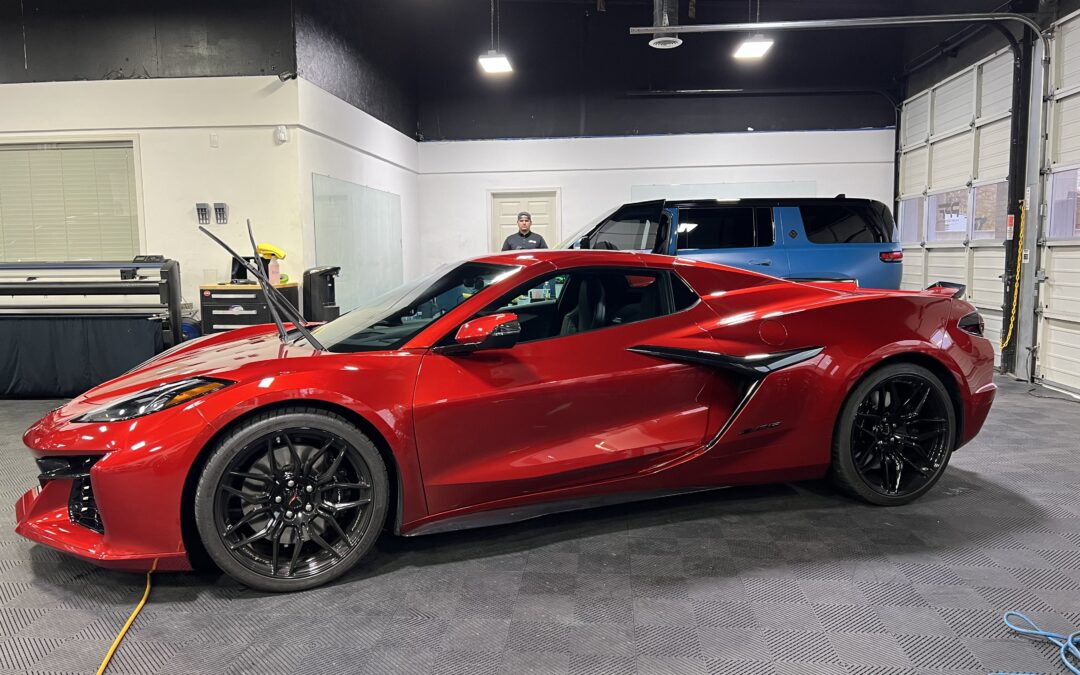
If you’ve ever walked across a parking lot in downtown Fresno in July, you already know the problem. Surface temperatures push past 100°F for weeks straight, the UV index regularly hits 10 or 11, and that relentless Central Valley sun doesn’t let up from May through October. Your car sits in it all day, and the damage adds up faster than most people realize.
So, how do you actually protect car paint from sun damage in a climate like ours?
Most advice you’ll find online suggests the usual: wax your car regularly, park in the shade, use a car cover. That’s fine if you live somewhere with mild summers. But in the San Joaquin Valley, where triple-digit heat is the norm and shade is hard to come by in open lots along Shaw Avenue or at River Park, those basic steps aren’t enough. The paint fades anyway. The interior cracks. The dashboard warps.
The real answer and the reason we wrote this guide is that sun protection for your vehicle requires two systems working together: paint protection film (PPF) on the exterior and ceramic window tint on the glass. One protects the paint and body panels. The other protects the cabin, the interior surfaces, and you. Together, they form complete vehicle protection that’s built for the kind of punishment California weather delivers.
Why Sun Damage Is a Bigger Problem in the Central Valley Than Most Places
Fresno sits in one of the highest UV exposure zones in California. The San Joaquin Valley’s flat, dry, and largely unshaded geography means your car’s paint absorbs UV radiation for more hours per day than in coastal cities like San Francisco or even Los Angeles, where marine layers provide some natural relief.
Here’s what that UV exposure actually does to your car over time:
- To the exterior: UV radiation breaks down the molecular bonds in your clear coat, causing oxidation. That’s the chalky, faded look you see on older vehicles around town, especially on hoods, roofs, and trunk lids that take the most direct sunlight. Darker paint colors like black and dark blue show it first, but every color eventually degrades. Once the clear coat fails, the base paint underneath has no protection.
- To the interior: UV rays penetrate glass and heat the cabin surfaces. Leather seats dry out and crack. Dashboard plastics become brittle and warp. Steering wheels fade. That “new car” look disappears years earlier than it should. The Skin Cancer Foundation also notes that UVA rays penetrating through side windows are a genuine health concern for frequent drivers, something worth considering if you’re commuting on Highway 99 or 168 daily.
- To your vehicle’s value: Cosmetic sun damage is one of the fastest ways to lose resale value. A vehicle with faded paint and a cracked interior is worth thousands less than one that’s been properly protected, even if the mechanical condition is identical.
The kicker? Parking in a covered garage helps, but most people in Fresno and Clovis don’t have that luxury at work, at the store, or at their kids’ school. Your car is sitting in direct sunlight for hours every single day.
Paint Protection Film: Your Car’s Exterior UV Shield
Paint protection film is a transparent, self-healing urethane layer that bonds directly to your vehicle’s painted surfaces. Think of it as a clear, sacrificial barrier between the sun (and everything else) and your paint.
We install XPEL ULTIMATE PLUS PPF at our shop, and it’s specifically engineered to handle UV exposure without degrading the way cheaper films do. Here’s what matters for sun protection:
It won’t yellow from UV exposure
This is a critical distinction. Lower-quality PPF films break down under intense UV exposure and turn yellow over time, defeating the entire purpose. XPEL ULTIMATE PLUS uses a UV-stable formulation designed to stay optically clear for the life of the film important when you’re dealing with the Central Valley’s extreme UV load year after year.
It absorbs impacts that heat makes worse
Hot paint is softer paint. When your clear coat is baking at 140°F+ on a summer afternoon, it’s more vulnerable to rock chips and road debris. If you drive Highway 99 or 168 regularly, you know the combination of agricultural trucks, construction vehicles, and general road debris is constant. PPF absorbs those impacts before they reach the paint, and XPEL ULTIMATE PLUS features a self-healing topcoat that light scratches and swirl marks disappear with heat exposure (which, here, means they basically heal themselves just sitting in the sun).
It protects against more than just UV
The Central Valley combo isn’t just sun; it’s sun plus agricultural dust, hard-water spots from irrigation runoff, bug splatter along Highway 99, bird droppings, and tree sap. PPF creates a chemical-resistant barrier against all of it.
Not sure how much coverage you need? We offer everything from partial front-end packages (hood, bumper, fenders, mirrors) to full body PPF coverage, depending on your vehicle and driving habits. For drivers who spend a lot of time on the highway or plan to keep a vehicle long-term, full front coverage is usually the minimum recommendation.
Ceramic Window Tint: Interior Protection and Heat Rejection
While PPF protects the exterior of your car, ceramic window tint blocks everything that passes through the glass: UV radiation, infrared heat, and visible glare. We install XPEL PRIME XR PLUS ceramic tint, and its performance specs set it apart from standard dyed or metallic tints. This matters especially in a climate where you’re fighting 100°F+ ambient temperatures for months at a time.
- 99% UV rejection. XPEL PRIME XR PLUS blocks 99% of harmful UV rays across the full UV spectrum. This protects your dashboard, seats, and interior trim from fading and cracking, and it protects your skin. The film has earned a recommendation from the Skin Cancer Foundation as an effective UV protectant, which tells you it’s not just marketing.
- Up to 98% infrared heat rejection. Infrared radiation is what makes your car feel like an oven, even with the AC running. PRIME XR PLUS rejects up to 98% of that infrared heat, which means noticeably lower cabin temperatures, less load on your AC system, and a far more comfortable driving experience through a Fresno summer. If you want to dig into the specific performance tiers across XPEL’s tint line, our XPEL window tint product guide breaks down the differences between XR PLUS, XR, HP, and CS films.
- No signal interference. Unlike metallic-based tints, ceramic tint won’t interfere with your GPS, cell signal, Bluetooth, or satellite radio. This is a practical consideration that gets overlooked until you’re dealing with it daily.
- Superior optical clarity. Ceramic particles are microscopic, so the film doesn’t have the hazy or reflective look of older metallic films. You get heat rejection without compromising visibility, which matters for both driving safety and aesthetics.
If you’re comparing tint types and wondering why ceramic specifically matters for heat rejection, we’ve covered that in detail in a separate guide. The short version: standard dyed tints fade fast and reject minimal heat; metallic tints interfere with electronics; ceramic is the only technology that delivers top-tier performance without trade-offs.
A Quick Note on California Tint Laws
One of the first questions people ask is “How dark can I go?” California has specific regulations on window tint darkness, measured in Visible Light Transmission (VLT). The front side windows have the most restrictions, while the rear windows have more flexibility. We walk through all of it on our California window tint laws page, worth reading before you decide on your tint levels so you stay compliant.
The Combo Effect: Why PPF + Window Tint Together Is the Real Answer
Here’s the point most online advice misses: protecting your car from sun damage isn’t an either/or decision. PPF and window tint address two completely different zones of your vehicle, and in a climate like Fresno’s, you need both.
- PPF protects the exterior: It’s the shield against UV-driven paint oxidation, rock chips, road debris, chemical contamination, and environmental fallout. Without it, your clear coat is absorbing 100% of the UV and physical damage your car encounters every day.
- Window tint protects the interior and the occupants: It blocks UV and infrared radiation that penetrates glass, keeping your cabin cooler, your surfaces intact, and your skin safer on long drives.
- Together, they create 360-degree protection: The entire vehicle, inside and out, is shielded from the specific combination of threats that the Central Valley delivers. No amount of wax or shade parking can replicate what this combination does.
Think about it this way: even if you wax your car every month, wax breaks down in 4–8 weeks under direct sun. A car cover protects in your driveway, but does nothing while you’re parked at work. Parking in the shade helps, but only when shade is available, and it does nothing for UV that’s reflecting off concrete and other surfaces. PPF and ceramic tint are always working, on every surface, all day, whether you’re driving on Highway 168 or parked at the Costco lot on Herndon.
Adding Ceramic Coating: The Full Protection Stack
For vehicle owners who want the absolute maximum level of protection, there’s one more layer to consider: ceramic coating. Applied over PPF, ceramic coating adds hydrophobic properties (water and contaminants bead off the surface), enhanced gloss, and easier maintenance.
The full protection stack looks like this:
- Layer 1 PPF (XPEL ULTIMATE PLUS): Physical protection against chips, scratches, UV, and chemical damage on the exterior panels.
- Layer 2 Ceramic Coating: Applied over the PPF for self-cleaning properties, added UV resistance, and a deeper shine that makes maintenance dramatically easier.
- Layer 3 Ceramic Window Tint (XPEL PRIME XR PLUS): UV and infrared heat rejection on all glass surfaces, protecting the interior and occupants.
We’ve written more about why applying ceramic coating over PPF makes sense and how the two products complement each other. It’s not a requirement, but for clients who want their vehicle looking showroom-fresh with minimal effort in the Central Valley heat, it’s the best setup available.
Choosing the Right Tint and Film for Your Vehicle
Not every vehicle needs the same level of protection, and part of our job is helping you figure out what makes sense for your car, your budget, and how you use it.
- If you’re commuting daily on Highway 99 or 168, Full front PPF coverage plus ceramic tint on all windows is strongly recommended. You’re accumulating road debris damage and UV exposure every single day. This combination protects your investment on both fronts.
- If your car parks outdoors most of the day, Ceramic tint becomes especially critical for interior protection, and PPF on at least the horizontal panels (hood, roof, trunk) addresses the worst of the direct UV exposure on paint.
- If you’re looking for the best tint brand and aren’t sure where to start, we’ve compared the top window tint brands XPEL, 3M, and Llumar in a detailed breakdown. Our recommendation is XPEL PRIME XR PLUS for heat rejection performance in our climate, but the comparison is worth reading if you want to see the differences side by side.
- If you’re driving a newer or high-end vehicle, the earlier you protect it, the more value you preserve. Sun damage is cumulative and irreversible once it starts. PPF and tint installed in the first year of ownership means the paint and interior stay in new condition for years longer than an unprotected vehicle.
Conclusion
Sun damage doesn’t wait, and it doesn’t reverse. Every day your car sits unprotected in the Fresno or Clovis sun, the paint degrades a little more, and the interior takes a little more heat. As XPEL-certified installers, we offer combined PPF and window tint packages designed specifically for Central Valley conditions. Whether you’re in Fresno or Clovis, we’ll help you figure out the right coverage levels and tint options for your vehicle.
Get a free quote for a PPF + tint package →
We also serve clients at our Clovis window tint and Clovis PPF locations for your convenience.
Frequently Asked Questions
How does sun damage affect car paint in California?
California’s high UV index especially in the Central Valley, accelerates clear coat oxidation, causing paint to fade, chalk, and lose gloss. Horizontal surfaces, such as hoods and roofs, take the most damage. Combined with extreme heat (regularly exceeding 100°F in Fresno), the clear coat breaks down much more quickly than in milder climates.
Is PPF or window tint better for sun protection?
They protect different parts of the vehicle, so it’s not a matter of choosing one over the other. PPF protects the exterior paint from UV oxidation, rock chips, and chemical damage. Window tint protects the interior cabin, dashboard, and occupants from UV rays and infrared heat. For complete sun protection, you need both.
How much UV does XPEL PRIME XR PLUS block?
XPEL PRIME XR PLUS blocks 99% of UV rays and rejects up to 98% of infrared heat. It’s recommended by the Skin Cancer Foundation as an effective UV protectant, one of the few automotive window films to earn that recognition.
Will paint protection film turn yellow in the sun?
Low-quality PPF films can yellow under prolonged UV exposure. XPEL ULTIMATE PLUS PPF is formulated with UV-stable materials specifically designed to resist yellowing, even under the extreme UV conditions found in the Central Valley. It also features a self-healing topcoat that repairs minor scratches when heated.
How dark can I tint my windows in California?
California has specific laws regulating window tint darkness, measured in VLT (Visible Light Transmission). Front side windows have the most restrictions, while rear windows allow a darker tint. We cover all the details and current regulations on our California window tint laws page.
Is ceramic window tint worth the extra cost over regular tint?
In a climate like Fresno’s, yes. Ceramic tint rejects significantly more infrared heat than dyed or metallic alternatives, doesn’t interfere with electronics, won’t fade or turn purple over time, and maintains optical clarity. The performance difference is most noticeable during Central Valley summers when you’re fighting sustained 100°F+ temperatures.