
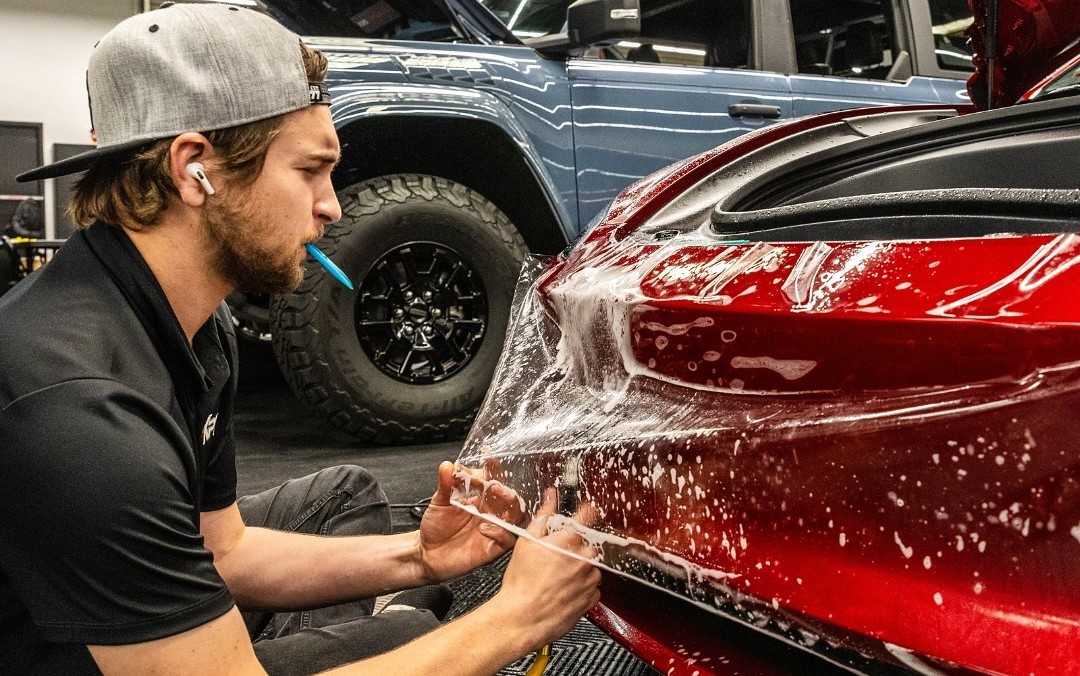
Paint Protection Film (PPF), often called “clear bra,” is a thermoplastic urethane film applied to painted surfaces of a new or used car. Its primary function is to shield the finish from damage caused by road debris, environmental fallout, and general wear.
While the result is a flawless, high-gloss appearance, PPF isn’t just a fancy sticker—it’s a scientifically engineered product that acts as a sacrificial layer against the elements. Before a roll of film ever reaches a professional installer, it undergoes extensive, rigorous testing to guarantee performance.
This process ensures the film lives up to its promise of long-term protection. In this article, we’ll explore the key methods used by manufacturers to test PPF for durability, clarity, and real-world performance.
What Makes a Quality PPF?
Not all films are created equal. Premium PPF must consistently demonstrate several essential qualities to be considered high-grade and reliable for vehicle protection:
- Scratch and Impact Resistance: The ability to absorb impacts from stones, gravel, and minor abrasions without allowing the damage to transfer to the underlying paint.
- Self-Healing Capability: The film’s unique molecular structure allows minor scratches and swirl marks to disappear when exposed to heat (like warm water or sunlight).
- UV and Chemical Resistance: Films must resist breakdown, cracking, and yellowing from intense ultraviolet rays and common corrosive substances like acidic bird droppings, bug guts, and road chemicals.
- Optical Clarity: The film must be virtually invisible, maintaining the original color, depth, and gloss of the factory paint without distortion or cloudiness.
- Adhesion Strength: The ability of the adhesive layer to bond securely to the paint without peeling, bubbling, or lifting, especially around complex curves and edges.
To ensure these demanding standards are met consistently, manufacturers subject PPF to a series of rigorous lab and field tests.
Lab Testing Methods
1. Scratch and Abrasion Resistance Tests
To quantify a film’s toughness, manufacturers rely on controlled machines that simulate abrasive damage far exceeding what a car might face in normal driving. Tools like abrasion wheels (using a Taber Abraser) or controlled sand slurry are used to attack the film’s surface.
Technicians measure the force, speed, and time required for the simulated debris or brushes to penetrate the film or cause permanent hazing. This determines the PPF’s durability rating.
2. Self-Healing Tests
This is one of the most defining characteristics of modern PPF. Films are intentionally scored with a precise, measured tool to create controlled surface scratches. The film is then exposed to controlled heat, often via hot water or a heat gun.
Technicians use high-magnification microscopes to observe and document the speed and completeness of the molecular rearrangement, verifying that the scratch disappears fully, often within seconds.
3. UV and Weather Exposure Testing
Sunlight is the ultimate enemy of plastic and polymers. To test for premature aging, films are placed inside artificial weather chambers (known as Xenon-Arc weathering devices). These chambers replicate months or years of intense, constant sun exposure and weather cycles in a matter of weeks.
The film is rigorously checked for signs of yellowing (a common failure point in low-quality PPF), cracking, or adhesive degradation under the intense UV, humidity, and temperature conditions.
4. Chemical Resistance Testing
PPF must act as a barrier against chemicals that would otherwise etch the clear coat. In the lab, technicians apply common corrosive substances such as gasoline, brake fluid, acidic bird droppings (simulated), industrial fallout, and concentrated road salts to the film.
The film is left to sit for a predetermined period, after which the surface is cleaned and inspected to see how its integrity, gloss, and adhesive strength have held up against chemical attack.
Real-World Performance Tests
1. Impact and Stone-Chip Tests
Since the primary function of PPF is impact resistance, specialized equipment is used to simulate high-speed road collisions.
Testers fire measured projectiles (often small stones or specialized pellets) at the film using a pressurized cannon at speeds up to and exceeding highway velocity.
This measures the film’s puncture resistance and elasticity—its ability to stretch and absorb the impact energy without allowing the debris to penetrate and chip the paint underneath.
2. Thermal Cycling Tests
Extreme temperature shifts, such as parking a hot car in a cold garage or driving from a freezing high-altitude to a scorching desert, can cause the film to expand and contract.
Thermal cycling tests repeatedly subject PPF samples to rapid and extreme heating and cooling. This determines the film’s stability and, most importantly, how the constant stress affects its adhesion, checking for peeling or edge lifting.
3. Long-Term Road Tests
There is no substitute for the unpredictable nature of the road. Reputable manufacturers install new PPF on dedicated test vehicles and subject them to months of rigorous real-world driving.
This evaluates the film’s long-term performance after exposure to heavy rain, dirt, automated car washes, and repeated cleaning, assessing how the clarity, gloss, and protective qualities endure under actual consumer use.
The Role of Industry Standards
The integrity of PPF testing is reinforced by global testing benchmarks. Industry standards bodies like ASTM (American Society for Testing and Materials) and SAE (Society of Automotive Engineers) provide defined protocols for testing materials performance, including chemical exposure, abrasion, and tensile strength.
Reputable brands like XPEL, 3M, and SunTek adhere to or actively exceed these fundamental standards. This commitment to third-party certification and consistency is crucial for both installers and consumers, ensuring a reliable, warrantied product.
Why Testing Matters to Car Owners
For you, the car owner, understanding this testing process offers peace of mind. It ensures the longevity and protection of your investment because you know the film has been proven under conditions tougher than daily driving.
Rigorous testing helps to differentiate premium PPF—the kind that truly self-heals and resists yellowing for years—from cheaper, untested alternatives that may fail quickly and damage your vehicle’s finish upon removal. Ultimately, comprehensive testing gives you full confidence in the manufacturer’s warranties and the film’s long-term performance.
The science behind Paint Protection Film is complex, requiring constant and rigorous testing to validate every claim made about durability and clarity. From simulated stone-chip impacts to controlled UV aging chambers, manufacturers invest heavily in proving their product before it reaches your vehicle. By choosing tested and certified brands installed by professionals, you ensure you are applying a product that will truly protect and preserve your car’s finish.
If you’re ready to protect your vehicle with industry-tested PPF, contact Paint Protection Fresno for expert installation and trusted materials in the Fresno area.
How Much of My Car Should I Wrap with PPF?
Get the Perfect PPF Coverage for Your Car With Paint Protection Fresno
When choosing the right PPF coverage, think about your driving habits and vehicle type. Partial Front Coverage is ideal for Fresno city drivers, offering protection for high-impact areas like the bumper and mirrors. If you’re frequently on highways, Full Front Coverage shields the most exposed parts of your car. For ultimate defense and long-term value, Full Body Coverage is perfect for luxury cars that need top-level protection.
At Paint Protection Fresno, we offer industry-leading products like XPEL ULTIMATE PLUS™, ULTIMATE FUSION™, and STEALTH™ to fit your vehicle’s specific needs. Reach out today to get a custom quote and protect your car from Fresno’s tough road conditions.